
The methodologies and work packages employed in SEMACRET are summarised as follows:
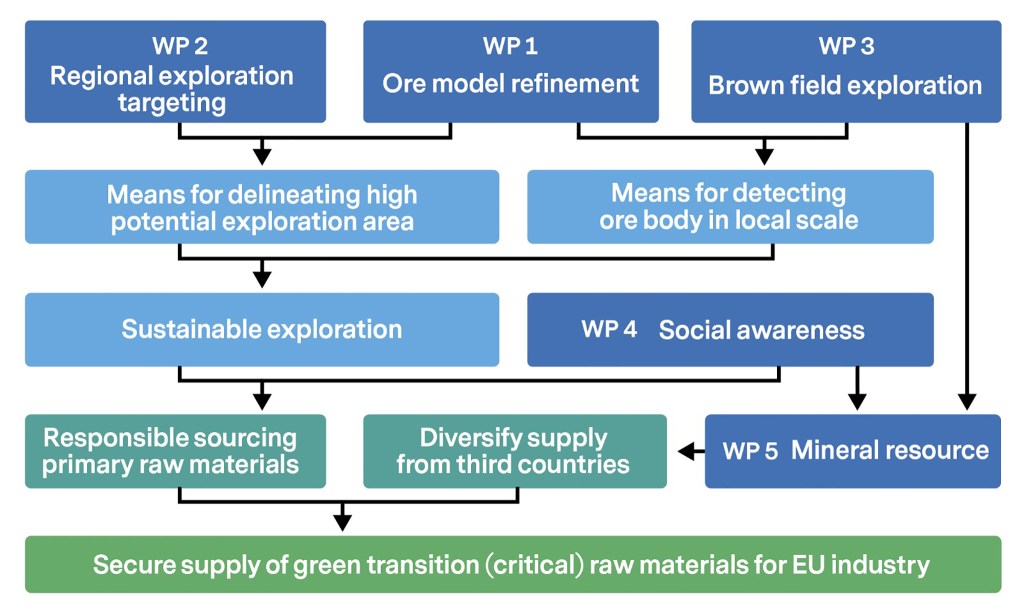
WP1 – Refining ore models of orthomagmatic mineral deposits using the Mineral Systems Approach
One of the key aims of this project is to apply, for the first time in the EU, the Minerals Systems Approach to develop sustainable (i.e. environmentally and socially friendly) exploration techniques for green transition (critical) raw materials hosted in orthomagmatic ore deposits. This implies improving our understanding of the essential components of the mineral system approach: ‘metal source’, ‘metal pathway’, and ‘metal sink’. This will be done initially for intrusions in our Lapland reference site and can then be applied to the other reference sites.
Identifying mantle sources can be made using Re-Os isotopes and Platinum Group Elements. We will apply these geochemical methods to Finish barren and mineralized intrusions to determine which have a chemical signature of the Sub Continental Lithospheric Mantle (SCLM) or asthenosphere and model these results with MELTS software to simulate partial melting from these different sources.
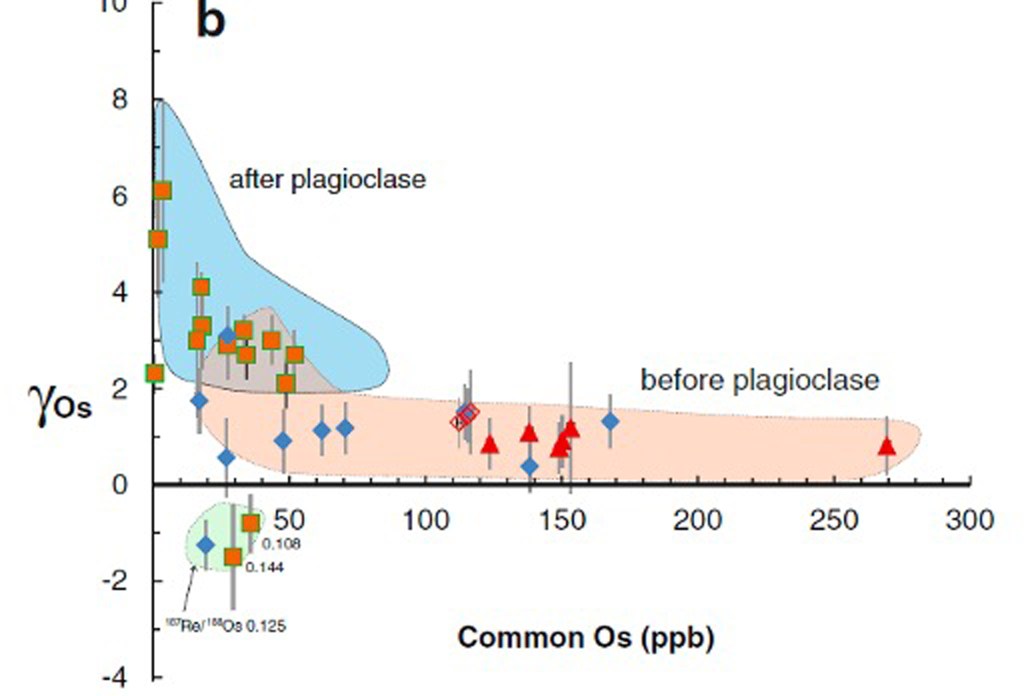
Pathways
The feeders and conduits of magmatic ore deposits are some of the most favorable locations for find magmatic sulfide mineralization. The location of these structures can be achieved by interpreting geophysical data for trans-crustal lineaments but also by studying complex zonation patterns in mineralized vs barren intrusions. Such zonation can be identified by the recognition of anomalously slow cooling rates in igneous rocks (using mineral thermometry), or quantitative crystal size distribution.

Metal sink: formation of ore deposits during crystallisation and contamination of magmas
Our approach to determine the processes controlling ore deposition is to study mineralised an d barren intrusions of broadly similar composition and country-rock lithology in the Lapland reference site. A key component of our research will rely on the integration of petrological studies with coupled fluid dynamic-thermodynamic simulations.
The importance of magma contamination will be quantified by high-precision lithogeochemistry, including analysis of incompatible trace elements, Re-Os, O, Nd, and Sr isotopes, in combination with high-temperature experiments to simulate sulfide saturation in the magma. A particular target will be how the assimilation of anhydrite and black shale trigger sulfide saturation, a key feature in Finish intrusions.

WP2 – Application of refined ore model to greenfield exploration in the EU
We will translate the critical factors of our ore deposit model, as developed in WP1, to mappable regional scale exploration criteria as proxies: regional-scale geophysics, regional geology, regional surficial geology and geochemistry. These proxies will be integrated via prospectivity modelling to vector towards high potential areas at the regional scale. Reference SITE 1, Lapland Belt (Finland) is selected as being ideal for testing regional scale targeting, because this belt hosts different mineralization styles of the orthomagmatic deposit group, and is the most active region for both mining and exploration for this ore type, with large, high-quality datasets available. Our exploration methods will be developed and validated in this region, and then applied to other sites in central and southern EU.

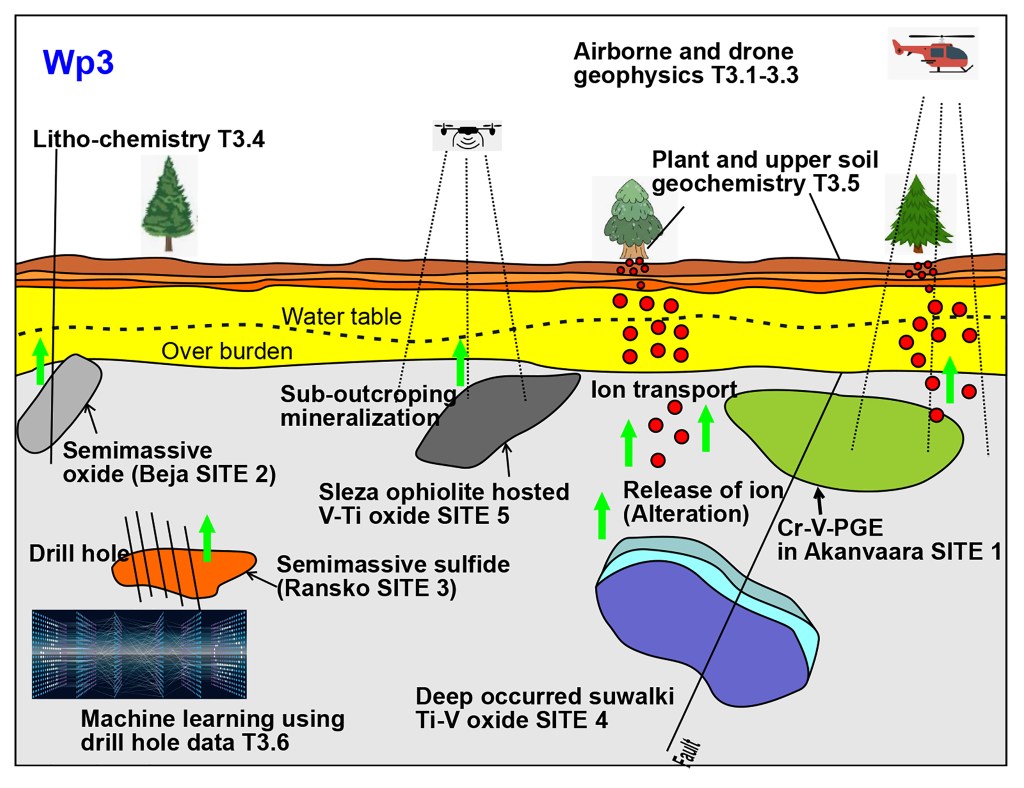
WP 3 – Application of refined ore model to brownfield exploration
The objective of this WP is to develop a solution integrating different innovative methods together to vector towards a high potential area at the local deposit scale. The planned solution starts from litho-chemical modelling, followed by various geophysical methods depending on sub-ore types, and then by environmentally friendly surficial geochemistry (upper soil, plant chemistry), and 3D prospectivity modelling via machine learning method where intensive drill core data is available. 5 deposits from reference region sites will be studied which represent different sub-types.
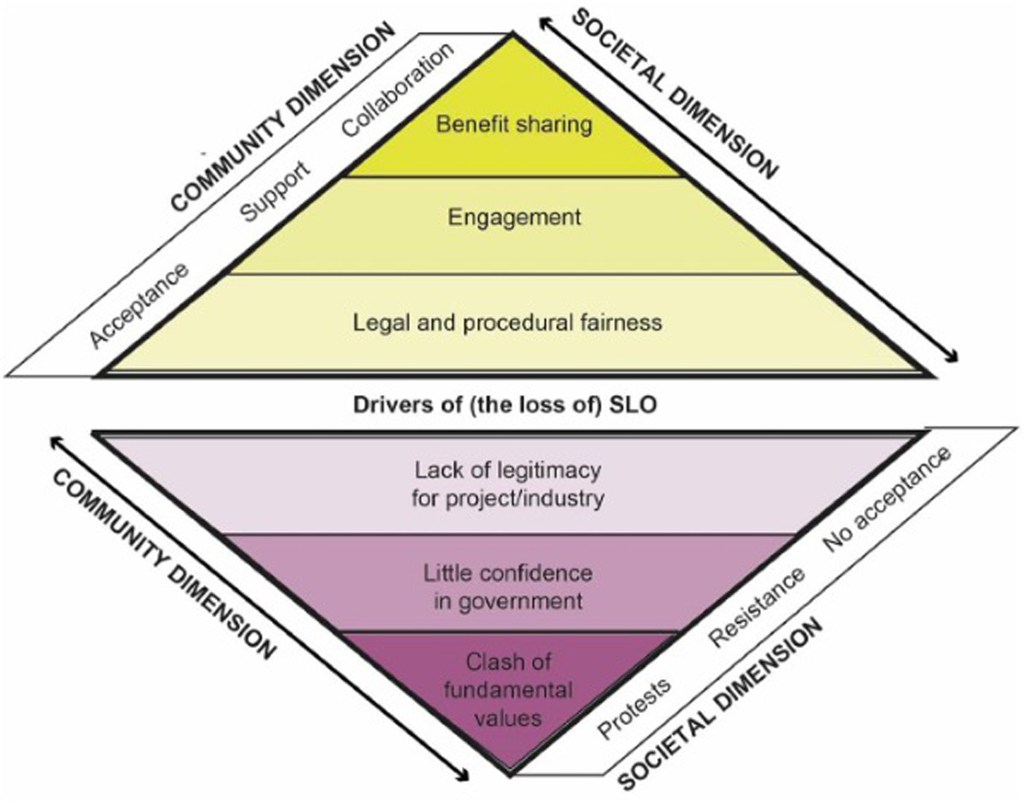
WP4 – Social awareness
WP4 will study citizens’ level of knowledge, and how this affects their attitudes towards, and acceptance of mineral exploration. This approach relies on qualitative and quantitative methodology by combining established and novel social scientific research methods. Ultimately, it seeks to develop a framework on acceptance, which integrates different levels of acceptance – from local to global scale. WP4 will study the representative reference sites, to explore the key factors that determine the social acceptance. WP4 is led by an expert team from social sciences and will closely collaborate with geoscientists of partners from different reference sites. These results will be used as a foundation to foster the awareness of the public (with WP6). WP4 will contribute to add a ‘social layer’ in the prospectivity GIS-based models. Overall, these findings will inform and improve communication and engagement efforts to raise awareness of mineral exploration in the European context.
WP5 – Mineral resource exploration and production potential mapping
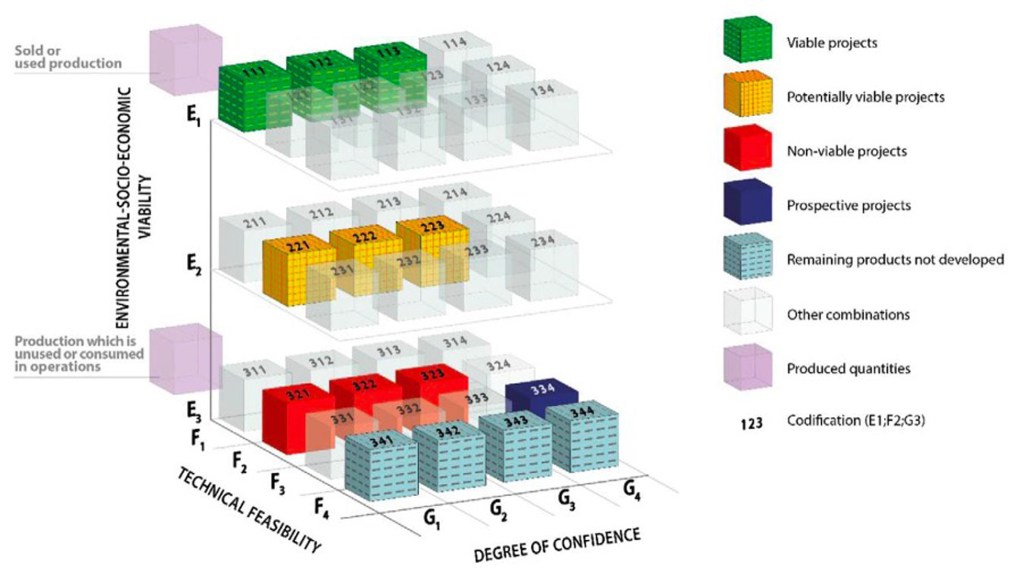
Mineral resources estimations, exploration potential or production capacity are reported in different ways across the EU and other countries. Many countries are not using reporting standards based on the worldwide recognized standards like JORC code, but the national reporting standards. This WP will conduct resource mapping of orthomagmatic rocks related to critical mineral resource exploration and production potential across the EU and global, including Ni, Cu, PGE, V, Ti, Cr. The aim is to classify the different mineral resource categories of orthomagmatic ore deposits, following the UNFC code and UNRMS system.
WP6 – Dissemination, clustering, communication, exploitation
The DCE package provides a coherent strategy to maximize the outreach of the technical-scientific output of the project for different target audiences. Measures are tailored in cooperation with WP4 (social awareness) considering the most appropriate message for each audience, the channel used for divulgation as well as an indication of the resources needed to roll out each activity their timing and duration.


 SEMACRET